“A very belonging kind of place”: Community-Engaged Research with Schools in Support of Newcomer Migrant Students
This is an ongoing collaborative study between University of Michigan’s Marsal School of Education and Melvindale High School (MHS). We ask: How do we create schools that are welcoming and inclusive for newcomer students and families with diverse identities and experiences? Our question centers on diversity, equity, and inclusion in Southeast Michigan communities, exploring the experiences of im/migration, schooling, and belonging within and across borders. It also attends to U-M students’ needs as learners and educational researchers-in-training in a globalized world, where transnational identity and belonging are central to individual, community, and school experiences.
This project was initially supported by the Ginsberg Center’s Community Engagement Grant, and is sustained through Marsal School of Education’s Educational Studies program. The 2021 class was awarded the University of Michigan’s Provost’s Teaching Innovation Prize.
Access the 2025 overview and slide deck, co-authored by Michelle J. Bellino, Felicia Akerele, Kaitlyn Dodgen, Yaa Donkor, Nando Felten, Dave Kobel, Cameron Lloyd, John Mobley IV, Karen Nortz, Chelsie Riche, Dreama Rhodes, Nora Rodman, Ricky Urgo, Viviana Velez Negron, Jason Westra-Hall, and Ben Wilkerson
Access the 2024 report, parent flyer, and student zine co-authored by Michelle J. Bellino, Sara Batool, Jodi Berry, Dorian Bobbett, Qiuyu Chen, Lywana Dorzilor, Alaka Gokul Varma, Mike Henderson, Aysha Jerald, Oluwaseun Oyindamola Ogunleye, day parker, Ashleigh Plummer, Victoria Rilett, Carol Umanzor, Yirong Xiang, and Jianjun (Larry) Zhu.
Access the 2023 report and student infographic, co-authored by Michelle J. Bellino, Aaron Bush, Alyse Campbell, Jae Eun Choi, Deepika Ganesh, Marquise Griffin, Soobin Jeon, Gracie Judge, Yining Li, Isabel Miller, Hannah Shaul, and Deepthi Suresh.
Access the 2021 report, co-authored by Michelle J. Bellino, Ignacio Loyola Bello, Bo-Kyung Byun, Minna Choi, Rebecca D’Angelo, Vikrant Garg, Mara Johnson, Leah Kanost, Garret Potter, Laura Romaine, Hilary Simpson, Allison Thorsen, Joey Valle, Ben Ward, & Mel Yang.
Access the 2020 report, co-authored by Michelle J. Bellino, Saraí Blanco Martinez, Claire Boeck, Scott J. Bridges, Erin R. Elliot, P. Alexander Miles, Katelyn M. Morman, Matt F. Park, Bernardette J. Pinetta, Tasneem Pota, Darrius D. Robinson, Angela M. Schöpke-Gonzalez, & Melody Wilson.
Teaching Peace in a Charged Landscape: The Democratic Potential of Peace Education During Colombia’s Peace Process
As Colombia transitions from more than fifty years of internal armed conflict, how will educators engage with students around the complex causes and consequences of protracted violence, and the fragile transition to peace?
Education and Belonging in the Context of an Unknowable Future: Youth Aspirations in Kakuma Refugee Camp
Research has demonstrated the significant role of schools in shaping young people’s evolving sense of civic identity, agency, and belonging. Yet we know little about the educational experiences of refugee youth whose opportunities for participation are constrained by encampment and exclusionary citizenship policies.
Education and Transitional Justice
This project seeks to develop a research cluster centered on the linkages between education as a sector and transitional justice. Drawing on semi-structured interviews with global leaders of transitional justice initiatives, the study aims to better understand the myriad ways that education is positioned and envisioned as a mechanism of transitional justice.
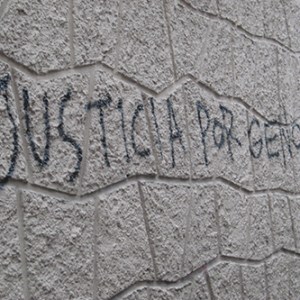
Memory in transition: Historical consciousness and civic attitudes among youth in postwar Guatemala
In the aftermath of mass violence, history education that depicts the violent past is considered an essential element of transitional justice processes, clarifying the historical record, reestablishing moral frameworks, promoting reconciliation, and acknowledging public memory of past atrocity for future generations. But how do individuals and communities narrate recent injustice in ways that empower youth, foster civic agency, and promote democratic culture?
 Michelle J. Bellino